A visit to a nutmeg plantation in Banda Neira is a guided, hands-on half-day encounter with the spice that once made these tiny volcanic islands the most fought-over real estate on earth. Instead of reading history behind museum glass, you walk under the shade trees with a local grower, watch nutmeg fruit split open in your hands, and taste the spice fresh rather than dried in a jar. Here is what the experience actually looks like as of 2026, and how to build it into a wider Banda Neira itinerary.
What Happens When You Visit a Nutmeg Plantation in Banda Neira?
Most visits follow a similar rhythm. You are picked up from your hotel or the harbor in Bandaneira town and taken a short distance — sometimes by foot, sometimes by a quick boat hop — to one of the working groves that still cover the hillsides of Banda Besar and the surrounding islets. A grower or a family member walks you through rows of nutmeg trees, some over fifteen meters tall, pointing out male and female trees and explaining why only the female trees fruit. From there the visit moves into the part travelers remember most: the harvest demonstration and the tasting. The whole experience typically runs two to three hours, requires no special fitness, and works well as a morning activity before an afternoon boat trip to Gunung Api or a walk through the old town.
Meeting the Grower and Your Guide
Unlike a scripted museum tour, a nutmeg plantation visit in Banda Neira is personal. Many of the groves you’ll walk through are still tended by Bandanese families, and it’s common for your guide to pause and let the grower explain things directly, with the guide translating and adding context. Expect informal conversation rather than a rehearsed script — questions about how the trees are cared for, how prices have shifted over the years, or what a normal harvest day looks like are usually welcomed. This is also where the human thread of Banda’s nutmeg story becomes tangible: the same hillsides that were fought over by European trading powers in the 17th century are still, today, small family plots passed down through generations.
The Harvest Demonstration: From Fruit to Mace and Nut
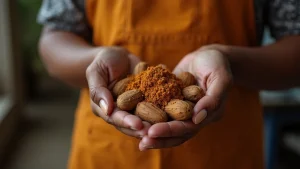
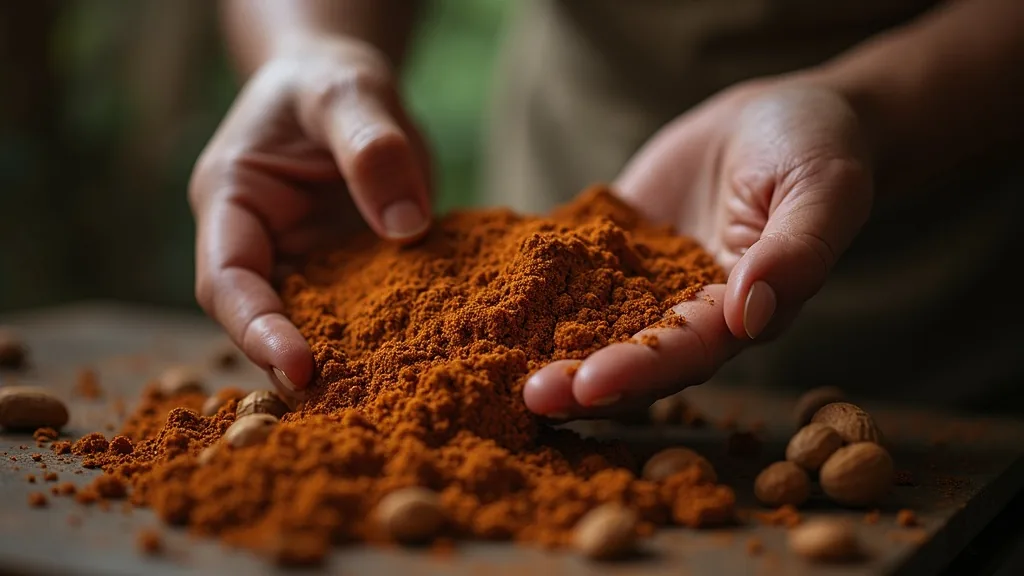
The core of the plantation visit is watching — and often helping with — the separation of a ripe nutmeg fruit into its parts. A ripe fruit is shown first: a pale yellow husk that splits naturally when mature. Inside, a bright red, lace-like covering called mace wraps around a hard brown shell. The guide peels the mace away by hand, then cracks the shell to reveal the nutmeg seed itself. Seeing all three products — husk, mace, and nut — come from a single fruit is usually the moment that clicks for visitors who only knew nutmeg as a jar of ground spice from the supermarket. If you want the fuller agricultural picture, including exactly which months growers are out picking fruit and why timing matters so much for quality, our nutmeg harvesting season guide for the Banda Islands goes into more depth than a single tour stop can cover.
Tasting Nutmeg the Bandanese Way
What surprises most first-time visitors is that Bandanese cooking uses more than just the dried seed. The fleshy husk itself is turned into manisan pala — candied nutmeg fruit — along with nutmeg syrup and jam that taste closer to a tart, slightly floral fruit preserve than the warm baking spice most travelers expect. A typical tasting stop includes a few of these preparations plus, often, a cup of nutmeg tea or a syrup drink. It’s a small detail, but it’s usually the part of the tour that turns “interesting history lesson” into “I need to bring some of this home.”
When Is the Best Time of Year for the Plantation Visit?
Banda Neira can be visited most of the year, but sea and flight conditions make some windows more comfortable than others. As of 2026, the two recommended stretches are September to December and March to May, when seas around the Banda archipelago are calmer and flight connections from Ambon tend to be more reliable.
| Period | Conditions | Good for |
|---|---|---|
| September – December | Generally calmer seas, drier weather | Plantation visits, diving/snorkeling, fort walks |
| March – May | Transitional season, mostly settled | Plantation visits, boat trips to Gunung Api |
| June – August & Jan – Feb | Can bring rougher seas or stronger winds at times | Still possible, but confirm conditions before finalizing dates |
Whichever window you choose, a nutmeg plantation visit in Banda Neira itself isn’t weather-dependent the way diving or an outer-island boat trip can be — it’s the getting there and the inter-island transfers that are worth planning around.
How Do You Get to Banda Neira to Visit the Plantation?
Banda Neira has no direct international or major domestic gateway, which is part of what has kept it so unspoiled. Nearly every trip routes through Ambon, the capital of Maluku province. From Ambon, travelers reach Banda Neira one of two ways: a small propeller aircraft on a limited, weather-dependent schedule, or the Pelni passenger ferry, an overnight or roughly eight-hour sea journey depending on the route and vessel. Because flight schedules to Banda change seasonally and can be affected by weather, it’s worth building a buffer day into your itinerary on both ends of the trip rather than booking tight onward connections.
Pairing the Plantation Visit With Forts, Gunung Api, and Diving
Because the plantation visit itself only takes half a day, most travelers combine it with Banda Neira’s other signature sites rather than treating it as a standalone activity. The obvious companions are Fort Belgica, the Dutch colonial fortress overlooking the town, and Rumah Budaya, the small heritage house museum nearby — both a short walk from the harbor. History-minded travelers often add a stop connected to Run, the tiny island the Dutch traded to England for Manhattan under the 1667 Treaty of Breda, one of the more remarkable footnotes in Banda’s story. Divers and snorkelers typically pair the plantation morning with an afternoon at Lava Flow, the underwater slope of black volcanic rock from Gunung Api’s eruptions, now covered in coral and reef fish. Because Banda’s nutmeg forests are part of what’s under consideration for UNESCO’s tentative heritage list, some travelers also treat the plantation visit as the “why this place matters” anchor for the rest of the trip. If you’d rather not string these stops together yourself, our combined nutmeg plantation and colonial forts day tour packages the plantation, Fort Belgica, and Rumah Budaya into a single guided day.
What Should You Bring and Expect on the Day?
- Comfortable closed shoes — plantation paths can be uneven and occasionally muddy after rain.
- Light, breathable clothing plus a light rain layer, especially outside the driest months.
- Cash in small denominations if you want to buy nutmeg products, syrup, or candied fruit directly from the grower.
- A camera or phone — the tree canopy and the mace-peeling moment are genuinely photogenic.
- Reasonable expectations around timing — a family-run grove is not a theme park, and the pace is unhurried by design.
Ready to Book Your Plantation Visit?
Arranging a nutmeg plantation visit in Banda Neira works best as part of a properly sequenced itinerary — flights or ferry timing from Ambon, the right season, and a guide who can connect the plantation to Fort Belgica, Gunung Api, and the diving sites without wasted time in between. As part of Juara Holding Group, operating from Bali across Indonesia since 2015, we put together end-to-end Banda Islands trips that cover exactly that: transport coordination from Ambon, the plantation visit, the colonial forts, and time on the water. Package pricing is indicative and depends on group size, season, and boat availability, so we confirm exact costs once we know your dates.
To check dates, seasonal conditions, and package options, message us on WhatsApp at +62 811-3941-4563 or email [email protected] — we’ll help you plan a Banda Neira trip built around the nutmeg plantation experience from the moment you land in Ambon.