Nutmeg harvesting season in the Banda Islands does not arrive as one short, dramatic picking week. Mature trees here fruit for most of the year, with a heavier flush of ripe pods generally falling between July and January and a quieter, greener stretch through the middle of the year. That difference matters if you actually want to see harvesting rather than just walk through a plantation — this guide lays out, month by month, what a grove visit typically looks like, so you can time a trip around real activity rather than guesswork.
When Is Nutmeg Harvesting Season in the Banda Islands?
Nutmeg (Myristica fragrans) is unusual among spice trees because a single mature tree can carry flowers, unripe green fruit, and ripe splitting pods all at once, often continuing to bear for decades once it reaches full production. Growers in Banda generally describe two windows of heavier activity rather than one strict season: a larger flush centered on the drier months of roughly July through September, and a second, lighter round of picking that carries on from around October into January. Outside those windows, from about February through June, groves tend to look greener and quieter — trees are still flowering and forming fruit, but there is far less picking, splitting, and drying happening on the ground. Keep in mind this is a general pattern rather than a fixed rule; rainfall, tree age, and individual grove management all shift the timing slightly from one plot to the next.
What Happens to a Nutmeg Pod Before It Reaches the Drying Rack?
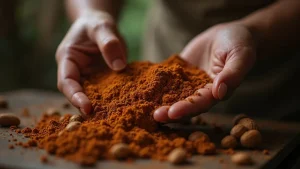
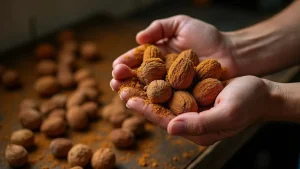
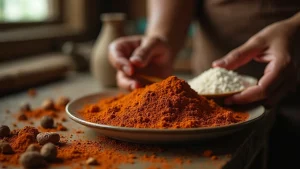
A nutmeg fruit looks like a small, pale yellow apricot. As it ripens, the outer flesh splits open on its own to reveal a hard brown seed wrapped in a bright red, lace-like covering called mace. Pickers gather the split pods, peel away the mace by hand, crack the shell to remove the seed, and lay mace and seed out separately to dry — the mace fading from red to a dull orange-brown, the seed inside eventually becoming the nutmeg sold whole or ground. On a working plantation, this is the sequence you are watching for: pods on the tree, mace being peeled at ground level, and racks of drying spice in the sun. During slower months you may only see the drying racks from a previous round rather than fresh picking in progress.
A Rough Season-by-Season Guide to What You’ll See
| Period | Grove Activity | What a Visitor Typically Sees |
|---|---|---|
| July – September | Heaviest harvest flush | Pickers gathering ripe, split pods; fresh mace peeled and laid out to dry; strong nutmeg-and-clove scent in the air |
| October – January | Secondary, lighter harvest | Fewer trees loaded at once, but picking and drying still ongoing; good balance of grove activity and calmer travel logistics |
| February – April | Mostly quiet; flowering resumes | Small white flowers on some branches; drying racks largely empty |
| May – June | Fruit developing, still unripe | Canopy heavy with green pods; almost no active picking; best for photographing the tree itself |
None of this means an off-peak visit is wasted. Even in quieter months, a local guide can point out flowering branches, immature fruit at different stages, and older drying infrastructure that explains how the spice moves from tree to sack. But if watching actual picking and mace-peeling is the point of your trip, the nutmeg harvesting season in the Banda Islands is at its most reliable between July and January.
How Does Harvest Timing Line Up With Banda’s Travel Season?
Banda’s general travel calendar — the calmer seas and drier skies most visitors plan around — is a separate question from harvest timing, and it is worth checking a dedicated weather guide before booking flights. What matters here is simply how the two overlap: the tail end of the heavier harvest flush and the whole of the secondary flush, roughly September through January, sits inside the stretch most travelers already treat as a good window for getting around the islands by boat. If combining a lively plantation visit with easy inter-island travel is your goal, that overlap is the most efficient target. Visiting in the other favorable travel months, closer to March through May, is still a fine time to see Banda, but expect a quieter grove — flowering trees and unripe fruit rather than pickers at work.
What Should You Expect on a Guided Plantation Visit?
Most nutmeg plantations open to visitors in Banda are small, family-run groves rather than large commercial estates, often mixed in with clove, cacao, and fruit trees on the same hillside. A typical stop includes a walk through the trees with a local guide, a hands-on look at a pod split open to show the mace and seed, and usually a chance to taste fresh mace, dried nutmeg, and sometimes a simple nutmeg syrup made from the fruit’s flesh, which is edible and traditionally used in home cooking on the islands. Because the trade itself shaped Banda’s colonial history, many visits pair naturally with a look at the region’s forts — our nutmeg plantation and colonial forts day tour is built around exactly that pairing, so a single day covers both the living grove and the fortified past built to control it.
If you want the fuller walkthrough of what a single plantation stop involves — access, walking time, what to wear, and how guides usually structure the visit — our dedicated page on visiting a nutmeg plantation in Banda Neira covers that in more depth than a seasonal calendar reasonably can.
Why Nutmeg Season Still Matters to Banda’s Identity Today
It is easy to forget, standing under a nutmeg tree, that this same fruit once made Banda one of the most fought-over places on earth. Until the eighteenth century, the islands were the world’s only known source of nutmeg, and European powers went to considerable lengths to control that monopoly — the most famous outcome being the 1667 treaty in which the Dutch traded the tiny nutmeg-producing island of Run to England in exchange for Manhattan. Fort Belgica and Fort Nassau, still standing above Banda Neira town, were built to defend that trade, and the Rumah Budaya cultural house preserves artifacts from the period. As of 2026, Banda’s nutmeg groves and colonial forts are among the sites on Indonesia’s UNESCO World Heritage tentative list, recognition of how tightly the spice, the architecture, and the islands’ history are bound together. Walking a working grove during nutmeg harvesting season is one of the few ways left to see that history as a living industry, not only a museum display.
Getting to Banda Neira for a Harvest-Season Trip
There is no shortcut route into Banda, which is part of what keeps the islands quiet even during peak harvest months. Almost every trip routes through Ambon first: from there, a small propeller plane makes the short hop to Banda Neira several times a week, schedules permitting, while the Pelni passenger ferry covers the same stretch by sea in roughly eight hours for travelers with more flexible timing. Because flight schedules are limited and can shift with demand, it is worth confirming current availability before locking in dates around a specific harvest window — one of the details our team checks for every itinerary we put together.
Few travelers come to Banda purely for nutmeg, and a harvest-season trip is usually one piece of a fuller itinerary. Snorkeling over the coral drop-offs at Lava Flow, climbing Gunung Api for a sunrise view over the bay, and walking the old fort walls all sit within a short boat ride or stroll of most plantation stops, so a single well-timed trip can reasonably cover all of it. Sequencing the day — grove visit in the cooler morning hours, water activities around midday, forts and cultural sites in the late afternoon — is exactly the kind of logistics we handle when we put a Banda itinerary together, rather than leaving it to chance on arrival.
Plan Your Nutmeg Harvest Season Visit With Us
Timing a Banda trip around nutmeg harvesting season takes more coordination than a standard beach holiday — limited flights, small family-run groves, and a harvest calendar that shifts slightly year to year all need to line up. Part of Juara Holding Group, operating from Bali across Indonesia since 2015, our team builds end-to-end Banda Neira itineraries that fold a plantation visit into a wider trip covering the forts, the volcano, and the reefs, with routing handled from your first flight to your last transfer. Package pricing is indicative and depends on group size, season, and route from Ambon, so we always confirm current rates directly rather than quote a fixed number in advance.
For help picking the right month — chasing active harvest scenes between July and January, or a quieter grove walk during the calmer travel season — reach out on WhatsApp at +62 811-3941-4563 or email [email protected], and we’ll help you build a trip around the season you actually want to see.