Traveling Banda Neira on a shoestring is realistic: a solo backpacker can cover accommodation, food, and local boat trips for roughly $20-30 a day once on the islands, with the biggest single cost being the Ambon-Banda leg itself. This Banda Neira backpacker budget guide breaks down homestay prices, warung meal costs, the public-transport-versus-charter decision, and a full 5-day sample budget for planning an independent, DIY trip rather than a pre-priced package. Prices below are indicative as of 2026 and shift with season and fuel costs, so confirm current rates locally before you commit.
How Much Should You Budget? A Banda Neira Backpacker Budget Guide to Daily Costs
Banda Neira is one of the cheapest corners of eastern Indonesia to travel through, mainly because the town is small, walkable, and still runs on a local economy rather than a resort one. A no-frills daily budget looks like this once you’ve arrived:
| Item | Indicative cost (per person, per day) |
|---|---|
| Budget homestay room | Rp 150,000-300,000 (~$10-20) |
| Meals (3x warung) | Rp 60,000-100,000 (~$4-7) |
| Local transport (becak/ojek/walking) | Rp 20,000-40,000 (~$1-3) |
| Shared boat trip or site entrance/donation | Rp 50,000-150,000 (~$3-10) |
Add it up and a frugal backpacker spends roughly $20-30 a day on the ground. For a line-by-line breakdown of where every rupiah goes, including seasonal price swings, see this daily budget breakdown for Banda Neira — it pairs well with the numbers in this guide if you want to plan a longer stay.
Getting to Banda Neira from Ambon: Public Boat, Small Plane, or Charter?
Every route to Banda starts in Ambon, and this is where your budget decision really gets made. There are three practical options:
- Pelni passenger ferry: the cheapest way in, with economy fares typically Rp 100,000-250,000 (~$7-16) one-way for the roughly 8-hour crossing. The trade-off is schedule — Pelni doesn’t sail daily on this route, running perhaps once or twice a week, so confirm the current timetable at the Ambon office before booking anything else.
- Small propeller plane: historically served by small-aircraft operators on a limited, demand-based schedule, taking 30-45 minutes. Fares commonly run $50-100 one-way when seats are available, but capacity is tiny, so book early and keep a backup plan.
- Private speedboat charter: the fastest, most flexible option, but priced for a group rather than a solo backpacker — expect several hundred dollars for the boat, split among however many people you fill it with.
For a true backpacker budget, the ferry wins if your dates are flexible; the small plane earns its cost if you’re short on time and a seat is open.
Where to Sleep: Cheapest Homestays in Banda Neira
Banda Neira’s accommodation scene is dominated by family-run homestays rather than international hotel chains, which works in a backpacker’s favor. The cheapest rooms — simple, fan-cooled, shared or private bathroom — run around Rp 150,000-250,000 a night, usually including a basic breakfast since many hosts cook for guests. Slightly nicer homestays with harbor or Gunung Api views push closer to Rp 300,000-400,000. Booking ahead by WhatsApp is common practice since online listings for Banda are still thin, and asking your host directly about boat trips and guides is usually cheaper than arranging things through a third party once you’ve arrived.
What Does Food Cost? Warung Meals and Local Eats
Food is where Banda stays genuinely cheap. A plate of rice with fish, vegetables, and sambal at a local warung typically costs Rp 20,000-35,000 (~$1.50-2.50). Fresh seafood — the islands sit in some of the richest waters in Maluku — is a highlight and rarely expensive, since it’s usually the catch of the day rather than anything flown in. Budget an extra Rp 10,000-20,000 for coffee or snacks, and three meals a day comfortably lands under Rp 100,000 (~$7) if you stick to warungs rather than the few sit-down restaurants aimed at visitors.
Free and Low-Cost Things to Do: Forts, Culture, and Nutmeg History
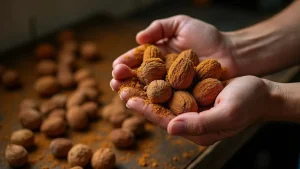
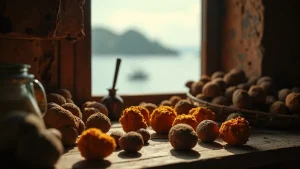
Banda’s history is what pulls most travelers here, and much of it costs little or nothing to see. Benteng Belgica, the star-shaped Dutch fort built in the early 1600s on the hill above town, is walkable from most homestays and charges only a small entrance donation. Rumah Budaya, the local cultural house, gives context on the Perkenier plantation system and the VOC’s nutmeg monopoly for a modest fee. Banda was once the only place on Earth producing nutmeg and mace, and this archipelago was valuable enough that the Dutch traded control of Pulau Run to the English for Manhattan under the 1667 Treaty of Breda — a swap that still feels unbelievable standing on the island itself. The Banda Islands’ nutmeg heritage has also been placed on Indonesia’s UNESCO World Heritage tentative list. Walking through an old nutmeg plantation with a local guide costs little more than a tip and is one of the best-value activities on the islands.
Diving and Snorkeling on a Budget: Lava Flow and Beyond
Banda’s reefs are steep, healthy, and largely untouched by mass tourism, which is exactly why divers rate the area so highly. Budget travelers can still get in the water without paying liveaboard prices: rent a mask and fins locally and join a shared boat out to Lava Flow — the reef formed where molten rock from Gunung Api’s 1988 eruption met the sea — one of the best cheap snorkeling trips in Indonesia. Splitting a boat with other backpackers at your homestay typically brings the per-person cost down to Rp 100,000-200,000 for a half-day trip covering two or three sites. Scuba diving costs considerably more since it requires certified guides, tanks, and compressors shipped in from further afield, so if diving is the priority, it’s worth comparing that against a structured option like the private group Banda Neira tour packages, which bundle dive logistics, boats, and guiding into one predictable price.
Climbing Gunung Api
The active volcano dominating Banda Neira’s skyline is climbable in roughly 2-3 hours, usually starting before dawn to reach the summit for sunrise over the archipelago. A local guide fee is customary and inexpensive, and it’s the single best free-ish view in Banda — well worth the early alarm.
Sample 5-Day Banda Neira Backpacker Budget Itinerary
Use this Banda Neira backpacker budget guide itinerary as a rough template — swap days around depending on boat availability and weather, since sea conditions genuinely dictate the schedule out here more than any fixed plan.
| Day | Plan |
|---|---|
| Day 1 | Ambon to Banda Neira (ferry or plane), check into homestay, sunset walk to Benteng Belgica |
| Day 2 | Rumah Budaya, the old Dutch governor’s residence, a walk through a nutmeg plantation |
| Day 3 | Shared boat day trip: snorkeling at Lava Flow plus a stop at Pulau Run or Pulau Ai |
| Day 4 | Pre-dawn Gunung Api hike for sunrise, rest and free time in town in the afternoon |
| Day 5 | Final warung breakfast, departure back to Ambon |
| Cost item (5 days, per person) | Indicative total |
|---|---|
| Return transport Ambon-Banda (ferry) | Rp 200,000-500,000 (~$13-33) |
| Homestay, 4 nights | Rp 600,000-1,200,000 (~$40-80) |
| Meals, 5 days | Rp 400,000-500,000 (~$27-33) |
| Boat trip, Gunung Api guide, entrance fees | Rp 250,000-450,000 (~$17-30) |
| Approximate total (by ferry) | Rp 1.45-2.65 million (~$97-176) |
Fly instead of taking the ferry and add roughly $100-180 to that total for the return flight. Either way, this Banda Neira backpacker budget guide shows that a full 5-day trip is achievable for well under $250 per person if you’re comfortable with basic homestays and warung food — genuinely one of the better value destinations left in eastern Indonesia.
When Is the Best Time to Visit Banda Neira?
The most reliable weather windows are September to December and March to May, when seas around the archipelago are calmer and visibility for snorkeling and diving is at its best. Outside these windows, stronger winds and swell can delay boat trips to Lava Flow, Pulau Run, and Pulau Ai, and can affect ferry and flight schedules too — worth factoring in if your dates are fixed.
Should You Book a Package Instead?
Everything above is written for travelers arranging transport, homestays, and boat trips themselves — for many backpackers, that’s half the appeal of Banda. But independent travel here comes with real friction: infrequent ferry schedules, limited flight seats, and boat trips that depend on finding other travelers to share costs with. If your dates are tight, you’re traveling with family, or you’d rather have someone else handle logistics while you focus on the history and the reefs, it’s worth looking at an end-to-end tour instead. Banda Neira Tour, part of Juara Holding Group — operating from Bali across Indonesia since 2015 — puts together itineraries covering transport from Ambon, accommodation, guided visits to Benteng Belgica and Rumah Budaya, and boat trips to Gunung Api and Lava Flow as one fixed package, including private group tour packages for families and small groups who want the DIY highlights without the DIY uncertainty. Whichever way you travel, message us on WhatsApp at +62 811-3941-4563 or email [email protected] and we’ll walk you through the options honestly, including which route makes most sense for your dates.